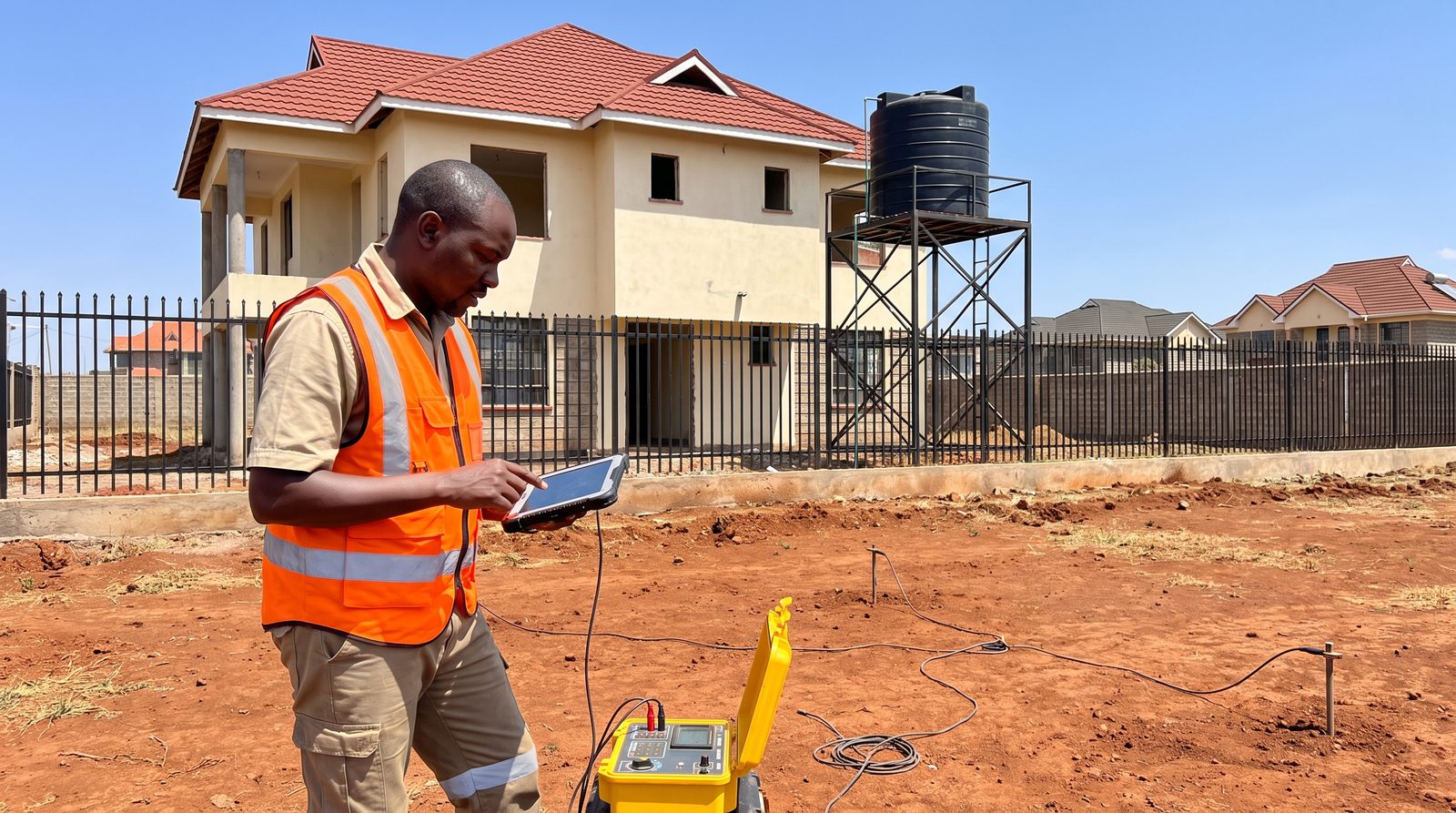
Hydrogeological Survey
Required before you can drill
A geologist maps the aquifer, marks the drilling point and writes the report the Water Resources Authority needs. Skip it and you risk paying for a dry hole.
FromKES 40,000
Get a quoteCheaper than a rig, and strictly limited to shallow holes in soft ground.
Get a free quote✓ Countrywide, all 47 counties
Manual borehole drilling uses hand augers and simple rigs instead of a mechanical rig. It is markedly cheaper than the KES 6,700 per metre a rig charges, but it only works in soft ground and realistically only to about 30 to 50 metres.
That limit is the whole story. If your survey puts the aquifer at 120m, manual drilling is not a cheaper option, it is simply not an option.
Required before you can drill
A geologist maps the aquifer, marks the drilling point and writes the report the Water Resources Authority needs. Skip it and you risk paying for a dry hole.
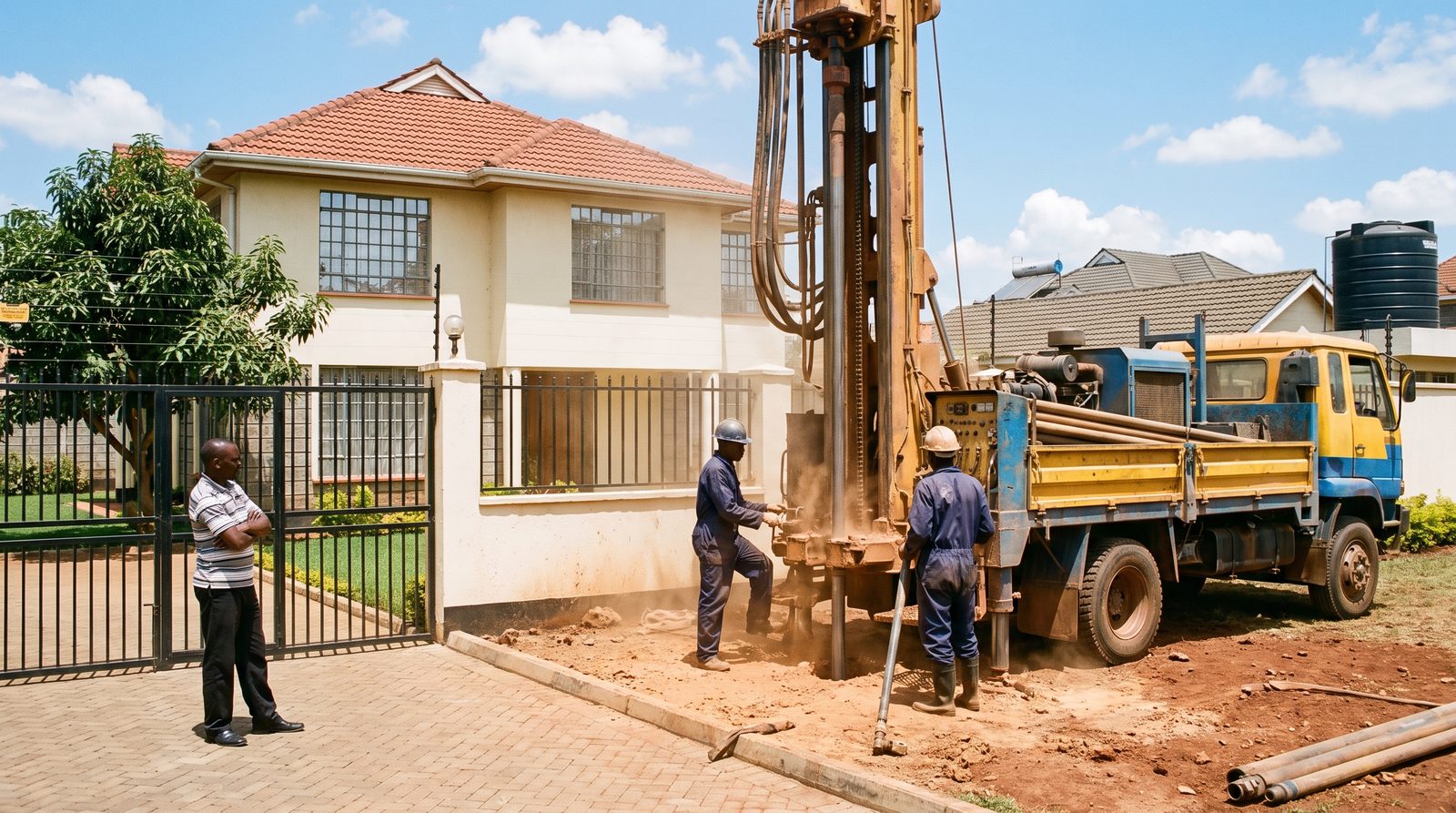
100m · air rotary · electric pump
The most common depth in the Nairobi metro. Covers the survey, permits, 100m of air-rotary drilling with casing, test pumping and an electric submersible pump.
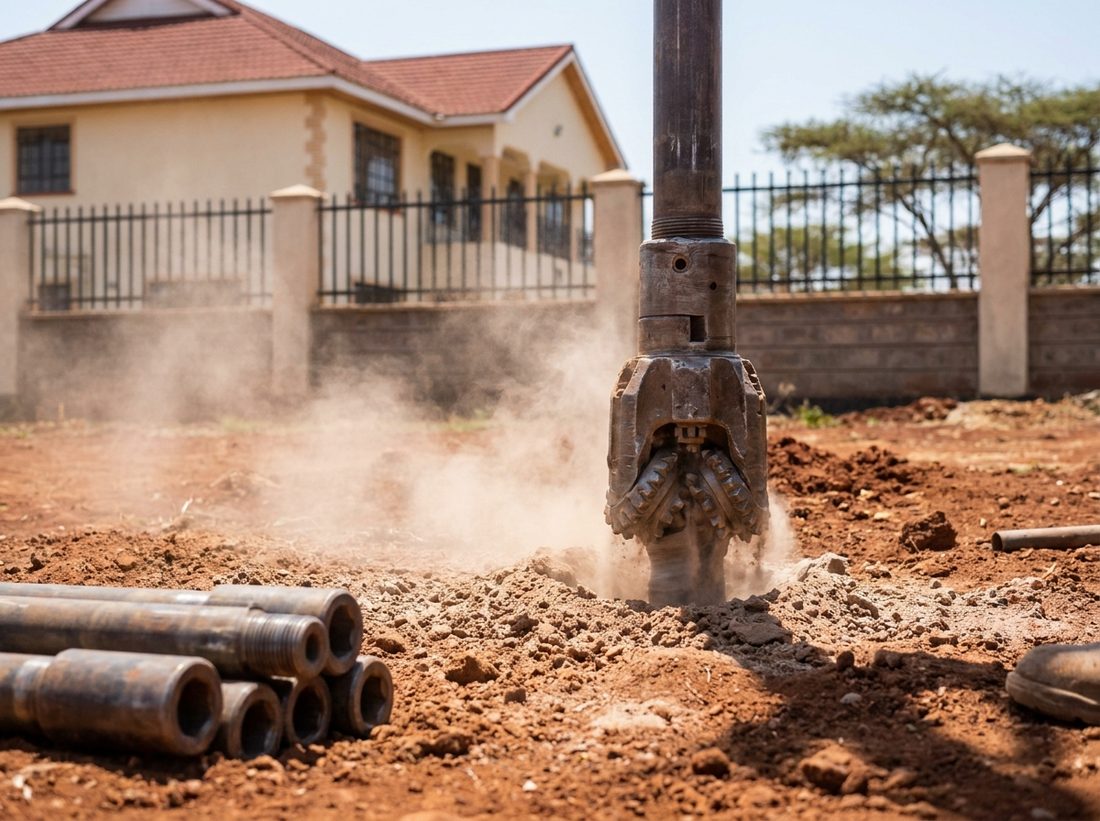
150m · air rotary · electric pump
Where the water table sits deeper, as in much of Kajiado, Machakos and the drier counties. Same scope as the 100m package with 50 more metres of drilling and casing.
Per metre · stable rock formation
The standard method where there is solid rock beneath. The per-metre rate already includes mobilisation, casing, graveling, well development and test pumping.
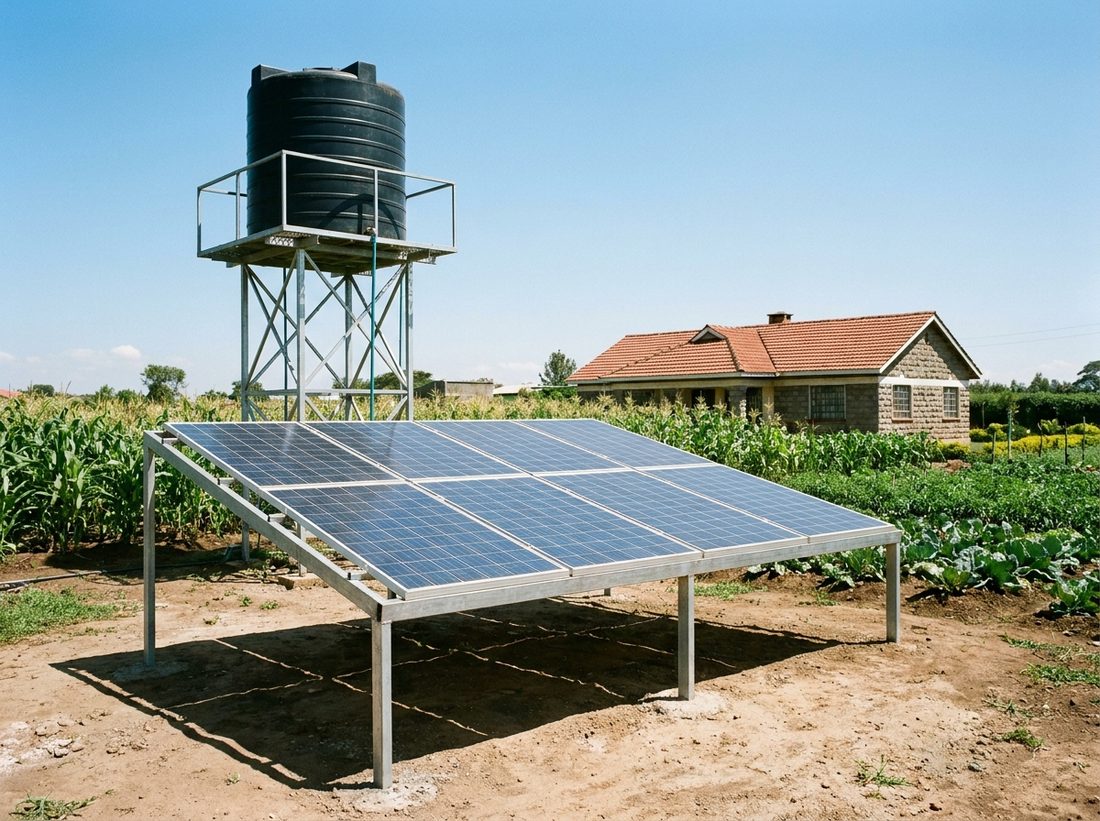
Solar pump, panels and controller
No power bill and no grid dependency, which matters on farms and off-grid plots. It costs more upfront than an electric pump and pays back through saved tokens.
Authorisation to drill
The Water Resources Authority permit and the NEMA environmental licence. Drilling without them is illegal and the borehole can be sealed.
It works where the survey shows a shallow water table in soft, sandy or clay ground with no rock to cut through. In parts of the coast and some lake basins that describes the geology well, and a manual borehole there is a sensible, cheap answer.
In most of the Nairobi metro it is not, because you hit hard volcanic rock that hand tools cannot get through.
Manual holes are narrower, shallower and usually more lightly cased, so yields are lower and the borehole is more exposed to contamination from the surface. They also silt up sooner.
The permits do not change. A manual borehole still needs the survey, the WRA permit and the NEMA licence, and those costs do not shrink with the method.
A borehole is five jobs bundled into one: the survey that finds the water, the permits that make it legal, the drilling, the test that proves the yield, and the pump. We run all five for you, with licensed rigs and a quote broken down line by line, so you know exactly what you are paying for before anyone starts.
Tell us where the plot is and what the water is for. We will handle the survey, the permits and the drilling, and come back to you with the likely depth and what it will cost. Countrywide, all 47 counties.
Get a free quoteConsiderably less than the KES 6,700 per metre a mechanical rig charges, but it is only viable in soft ground to roughly 30 to 50 metres. The survey and permits cost the same either way.
Realistically 30 to 50 metres in soft ground. Hard rock stops hand drilling, which rules it out across much of the Nairobi metro.
Only if the survey confirms a shallow aquifer in soft ground. If the water is deeper or the ground is rocky, it is not a saving, it is a hole that never reaches water.
Your own water supply, drilled by licensed contractors. Find out what your site needs and what it will take.
View Home →Every line of a borehole quote, priced at the 2026 market rate, so you can tell a fair number from a padded one.
View Cost →The step that decides whether your borehole finds water, and the report the Water Resources Authority will ask for.
View Survey →The lining that keeps the hole open and the dirty water out. It is where cheap quotes cut corners.
View Casing →