Your own water supply, drilled by licensed contractors. Find out what your site needs and what it will take.
View Home →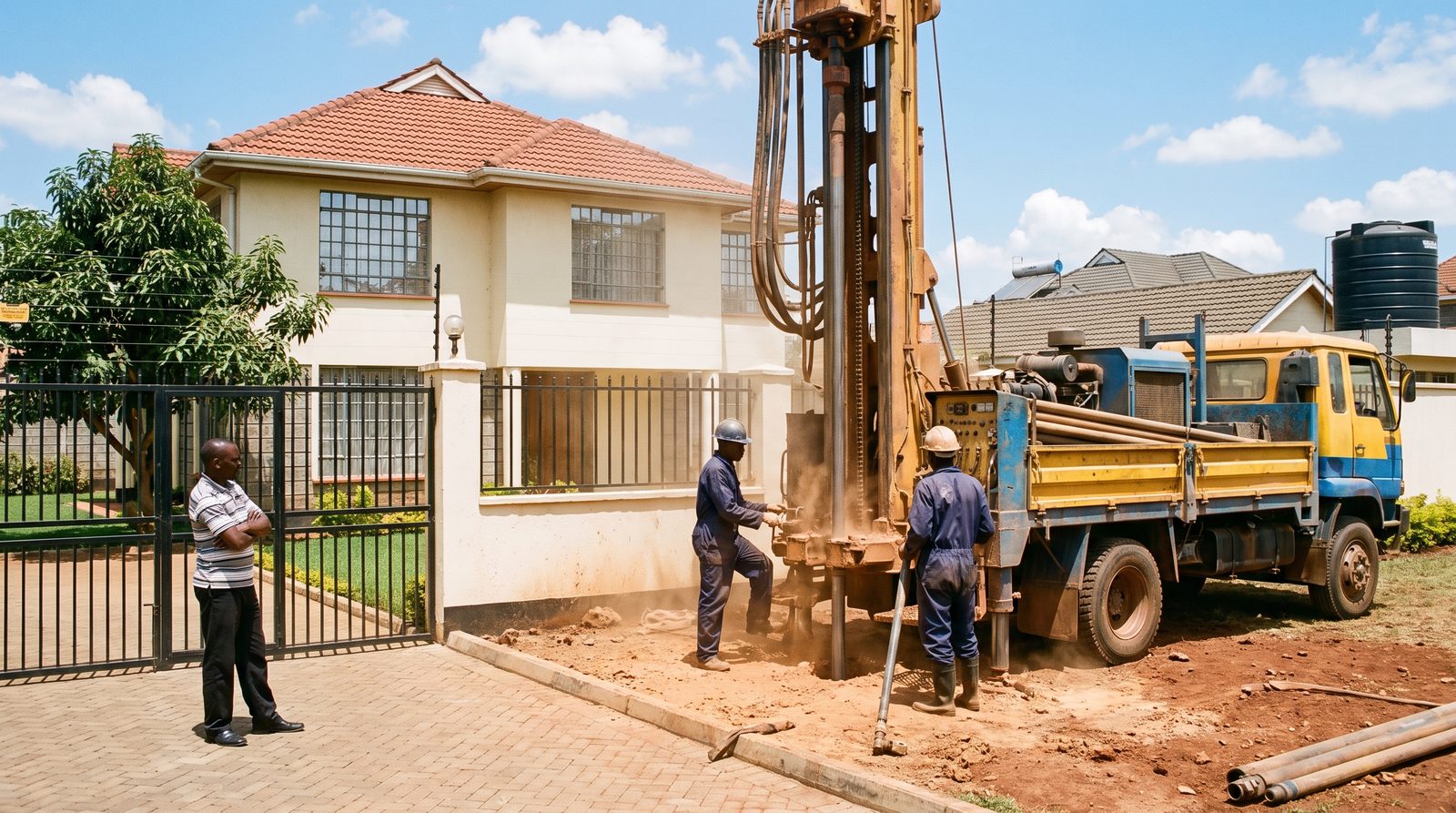
Kenya's borehole guide
Borehole Glossary
The words your quote and your permit use, without the jargon.
Get a free quote✓ Countrywide, all 47 counties
Survey first
We drill where the water is
Licensed rigs
Permit checked every job
Permits handled
WRA and NEMA sorted for you
Real market rates
Published per metre
Glossary
Borehole quotes and Water Resources Authority paperwork are full of terms that are never explained to the person paying. Most of them are simple once someone says them plainly.
These are the ones that actually change what you pay or what you get.
Every term, explained
12 terms your quote, your survey report and your WRA permit will use.
- AquiferAn aquifer is a layer of rock or sand underground that holds water and lets it move through.
- Water tableThe water table is the level below which the ground is saturated.
- Static water levelThe static water level is how far below the surface the water settles when the pump is switched off and the borehole has rested.
- Draw-downDraw-down is how far the water level falls while the pump is running.
- YieldYield is how much water a borehole can sustainably produce, measured in cubic metres per hour.
- Test pumpingTest pumping is the controlled pumping done at the end of drilling to measure what the borehole can actually deliver.
- Well developmentWell development is the process of cleaning a newly drilled borehole so that water flows freely into it.
- Borehole screenThe screen is the slotted section of casing that sits against the water-bearing rock and lets water in while keeping sand out.
- Artesian boreholeAn artesian borehole is one where the water is under enough natural pressure to rise up the hole on its own, sometimes flowing at the surface without any pump.
- WRA (Water Resources Authority)The Water Resources Authority is the Kenyan body that regulates groundwater.
- NEMANEMA is Kenya's National Environment Management Authority.
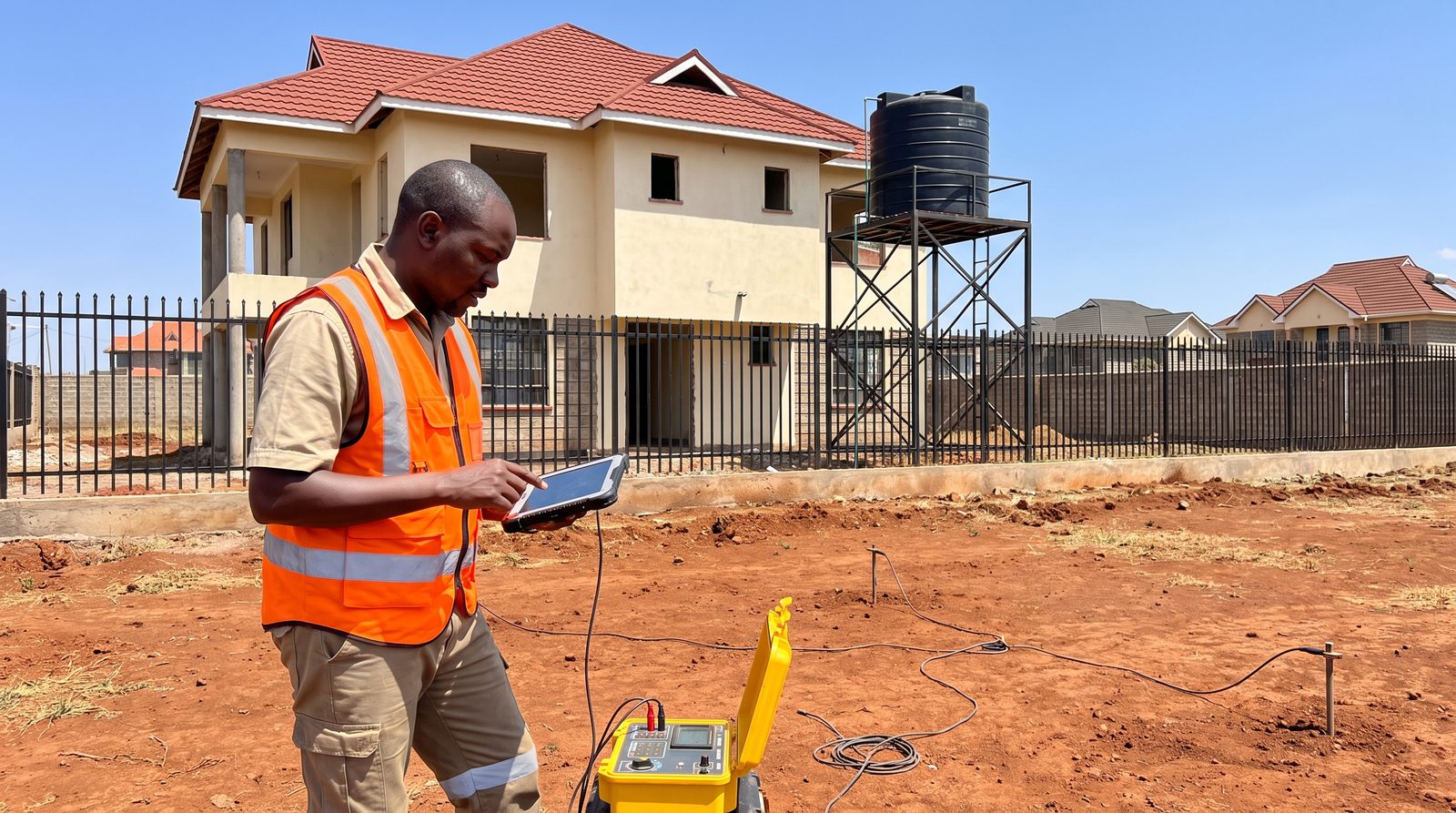
- TEM surveyA TEM survey, short for transient electromagnetic survey, is one of the methods a geologist uses to find water underground.
The terms that decide your cost
Depth is set by the aquifer and the water table, and depth is the single biggest driver of price. Ground type decides whether you drill air rotary or mud rotary, which roughly doubles the per-metre rate.
Yield decides what pump you can use, and therefore what the borehole is actually worth to you. Draw-down and static water level are how yield is measured and proved.
Why Proboreholedrillers
One team from the survey to the first glass of water
A borehole is five jobs bundled into one: the survey that finds the water, the permits that make it legal, the drilling, the test that proves the yield, and the pump. We run all five for you, with licensed rigs and a quote broken down line by line, so you know exactly what you are paying for before anyone starts.
- ✦ Survey first, so you drill where the water is
- ✦ WRA and NEMA permits handled for you
- ✦ A quote itemised at real market rates
Do you need a borehole drilled?
Tell us where the plot is and what the water is for. We will handle the survey, the permits and the drilling, and come back to you with the likely depth and what it will cost. Countrywide, all 47 counties.
Get a free quoteQuestions, answered
Frequently asked questions
What is the most important number in a borehole quote?+
Yield, in cubic metres per hour, measured during test pumping. It decides what pump you can fit and whether the borehole meets your needs. Depth decides what you pay; yield decides what you get.
Explore more
Every line of a borehole quote, priced at the 2026 market rate, so you can tell a fair number from a padded one.
View Cost →The step that decides whether your borehole finds water, and the report the Water Resources Authority will ask for.
View Survey →The plain version, before you spend a million shillings on one.
View Buyer's Guide →