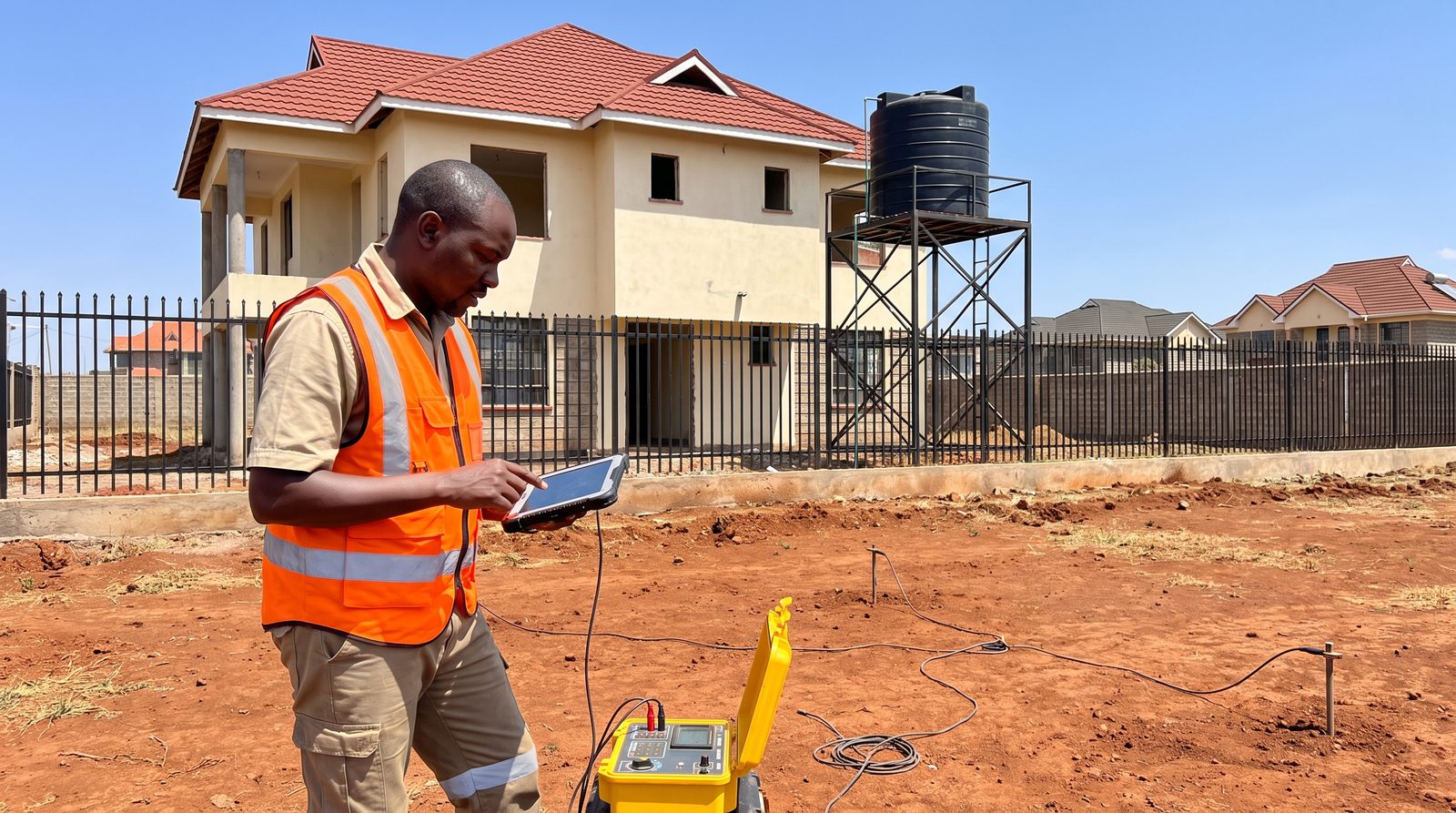
Hydrogeological Survey
Required before you can drill
A geologist maps the aquifer, marks the drilling point and writes the report the Water Resources Authority needs. Skip it and you risk paying for a dry hole.
FromKES 40,000
Get a quoteThe survey, the WRA permit and the NEMA licence, in the order they actually happen.
Get a free quote✓ Countrywide, all 47 counties
To drill a borehole in Kenya legally you need three things in this order: a hydrogeological survey report, a permit from the Water Resources Authority, and an environmental licence from NEMA. The permits together cost roughly KES 50,000 and the survey KES 40,000 to KES 90,000.
Drilling without them is illegal. The county can seal the borehole, and you have no recourse against the contractor who drilled it.
Roughly KES 90,000 and six weeks of compliance stands between you and a legal borehole. Against a job of well over a million shillings that is a small fraction, and it is the fraction people try hardest to cut.
| Stage | Cost | Time | Who does it |
|---|---|---|---|
| Hydrogeological survey and report | From KES 40,000 (market runs to 90,000) | About 7 days | A hydrogeologist |
| WRA authorisation to drill | Part of ~KES 50,000 with NEMA | 15–30 days | You or your contractor |
| NEMA environmental licence | Part of ~KES 50,000 with WRA | Runs alongside WRA | You or your contractor |
| Drilling | From KES 6,700/m air, KES 15,050/m mud | 4–10 days | A WRA-permitted rig |
| Test pumping and water analysis | Inside the metre rate | 1–2 days | The drilling contractor |
| Water use authorisation | Assessed against proven yield | After test pumping | WRA |
Survey, permit and stage figures reflect current Kenyan market rates, verified July 2026. Proboreholedrillers handles the survey and the paperwork as part of the job.
Required before you can drill
A geologist maps the aquifer, marks the drilling point and writes the report the Water Resources Authority needs. Skip it and you risk paying for a dry hole.
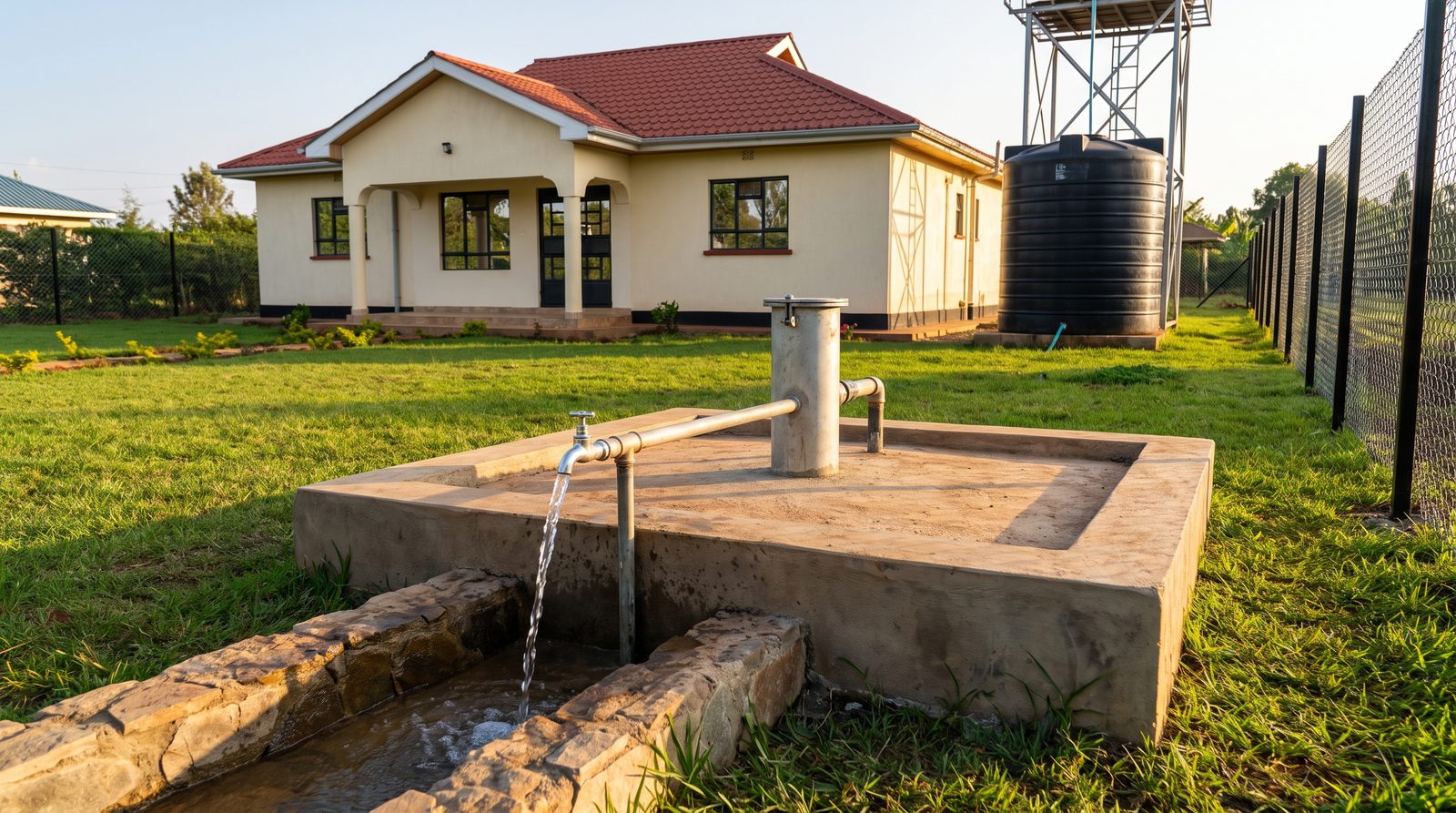
Authorisation to drill
The Water Resources Authority permit and the NEMA environmental licence. Drilling without them is illegal and the borehole can be sealed.
First the hydrogeological survey, because both permits depend on its report. Second the Water Resources Authority permit, which authorises abstraction of groundwater at that point. Third the NEMA environmental licence, which covers the impact of the works.
Expect four to eight weeks for the paperwork. The drilling itself is only two to five days, so the permits, not the rig, set your timeline.
Nothing starts without this. A hydrogeologist studies the regional geology, takes field readings across your plot, marks the point to drill and writes a report giving the expected depth, the likely yield and the recommended drilling method. It costs from about KES 40,000 and the market runs to KES 90,000 and beyond depending on the site.
The report is not a formality you buy to satisfy a clerk. It is the document the Water Resources Authority assesses, and it needs to come from someone qualified to sign it, so ask who is writing it before you commission the work. A report from a name the Authority does not recognise is a delay you pay for twice.
It is also the only thing standing between you and a dry hole, which you would pay for in full. On a million-shilling project, spending four per cent to find out whether the other ninety-six is worth spending is the easiest decision in the whole job.
The Water Resources Authority regulates groundwater in Kenya, and the permit is issued against a specific point on a specific parcel, which is why it cannot be applied for before the survey has marked that point. Expect to produce proof of ownership or a lease for the land, the survey report, and the details of the contractor and rig that will do the work.
Two things surprise people here. The first is that the authorisation to drill and the authorisation to use the water are treated as separate stages: you are permitted to make the hole, and then, once the borehole is tested and its real yield is known, your abstraction is authorised against that number. The second is that the permit attaches to the land, not to you, so it stays with the property when you sell.
Budget roughly KES 50,000 for the WRA permit and the NEMA licence together, and 15 to 30 days for the paperwork. It is the slowest stage of the job by a wide margin.
The National Environment Management Authority licenses the environmental side. For a domestic borehole this is normally a straightforward assessment; for a large abstraction, an institution or anything with a meaningful footprint, expect a fuller environmental impact assessment and a longer wait.
It runs in parallel with the WRA process rather than after it, which is why the whole permitting stage collapses into roughly the same three to four weeks rather than stacking into two months. A contractor who handles this regularly knows how to file them together. One who does not will discover the sequencing at your expense.
It is worth being blunt, because plenty of people are quietly advised to skip this. An unpermitted borehole can be sealed. The enforcement lands on the landowner, not on the contractor who drilled it and moved on, and the fines for illegal abstraction in Kenya run into serious money.
The slower damage is to the land itself. An unpermitted borehole is a defect on the property: it surfaces in due diligence when you sell, it complicates any financing secured against the parcel, and regularising it after the fact is more expensive and slower than doing it in order. You will also have no recourse against the driller if the work is bad, because you cannot complain about work you were not licensed to commission.
Anyone offering to have a rig on your plot next week is telling you, without saying it, that they intend to skip this. That is not speed. It is your risk, priced as their convenience.
Budget roughly KES 90,000 and about six weeks for the whole compliance stage before a rig turns a metre. The hydrogeological survey is from KES 40,000, and the market runs to KES 90,000 and beyond on a difficult site. The WRA permit and the NEMA licence together come to roughly KES 50,000. The survey takes about a week including the report; the permits take fifteen to thirty days.
Against a total job of well over a million shillings, that is a small fraction, and it is the fraction that makes the rest legal and the rest sensible. It is also the fraction people try hardest to cut, which is the clearest evidence in this market that price pressure is applied at exactly the wrong end.
Almost every expensive borehole story in Kenya starts the same way: a rig was booked before a geologist was. Someone knows someone with a machine, the price sounds good, the rig is free next week, and the survey and the paperwork are treated as things to sort out afterwards.
There is no afterwards. The Water Resources Authority permit is issued against a surveyed point, so a hole drilled before the survey cannot be permitted where it stands. The permit and the licence are not stamps you collect once the water is flowing; they are the authorisation to make the hole at all. Reversing the order does not save you the four weeks. It costs you the borehole.
A common misreading is that this is only for big abstractions. It is not. The Water Resources Authority regulates groundwater, and a domestic borehole on a quarter-acre in Kitengela is groundwater. The process is lighter for a household than for a farm drawing thousands of litres an hour, but there is no threshold below which you may simply drill.
Where it does change is scale. A large abstraction, an institution or a commercial user faces a fuller environmental assessment and a longer NEMA process, and the water use authorisation that follows test pumping is measured against what you actually intend to take. A household that later becomes a car wash has changed the terms of its own permit without noticing.
It also applies to a borehole you inherited. If you buy land with an unpermitted hole on it, the problem transfers with the title, and you are the one who will be asked for paperwork nobody ever filed. Ask for the permit during due diligence, not after.
Ask the contractor for their WRA licence number and confirm it is current. Ask whether the quote includes the permit fees or leaves them to you, because this is the most common hidden cost in a borehole quote.
Get the permits in your name as the landowner, not the driller's. If the relationship goes wrong you want the authorisation to stay with the land.
A borehole is five jobs bundled into one: the survey that finds the water, the permits that make it legal, the drilling, the test that proves the yield, and the pump. We run all five for you, with licensed rigs and a quote broken down line by line, so you know exactly what you are paying for before anyone starts.
Tell us where the plot is and what the water is for. We will handle the survey, the permits and the drilling, and come back to you with the likely depth and what it will cost. Countrywide, all 47 counties.
Get a free quoteA hydrogeological survey report, a Water Resources Authority permit and a NEMA environmental licence. The survey must come first because both permits depend on it.
Roughly KES 50,000 for the WRA permit and NEMA licence together, on top of the KES 40,000 to KES 90,000 survey.
Commonly four to eight weeks from survey report to approval. The drilling itself is only two to five days, so the paperwork sets the timeline.
The borehole can be sealed by the authorities and you have no protection if the work is defective. It also makes the borehole a problem when you sell the land.
Your own water supply, drilled by licensed contractors. Find out what your site needs and what it will take.
View Home →The step that decides whether your borehole finds water, and the report the Water Resources Authority will ask for.
View Survey →Every line of a borehole quote, priced at the 2026 market rate, so you can tell a fair number from a padded one.
View Cost →The plain version, before you spend a million shillings on one.
View Buyer's Guide →Clean at the source is not the same as safe to drink. What the tests look for and what to do about it.
View Water & Safety →