Proboreholedrillers
Open menu
Kenya's borehole guide

Borehole Drilling Cost in Kenya

Every line of a borehole quote, priced at the 2026 market rate, so you can tell a fair number from a padded one.

Get a free quote

Countrywide, all 47 counties

Survey first
We drill where the water is
Licensed rigs
Permit checked every job
Permits handled
WRA and NEMA sorted for you
Real market rates
Published per metre
Cost

Drilling a borehole in Kenya costs from about KES 645,000 for a 50m hole, KES 980,000 for 100m and KES 1,315,000 for 150m, drilled, cased and fitted with a pump. The drilling on its own is about KES 6,700 per metre through stable rock, rising to about KES 15,050 per metre in loose ground where mud rotary is needed.

Depth is what moves the number most, and you do not know your depth until a geologist has surveyed the site. Everything below is the market rate, not a quote from us.

ItemSpecFrom
Test Pumping and Water AnalysisPer metre · yield plus chemical testKES 441
Casing and Gravel PackPer metre · uPVC or steelKES 2,269
Air Rotary DrillingPer metre · stable rock formationKES 6,700
Mud Rotary DrillingPer metre · loose groundKES 15,050
Hydrogeological SurveyRequired before you can drillKES 40,000
WRA and NEMA Permit ProcessingAuthorisation to drillKES 50,000
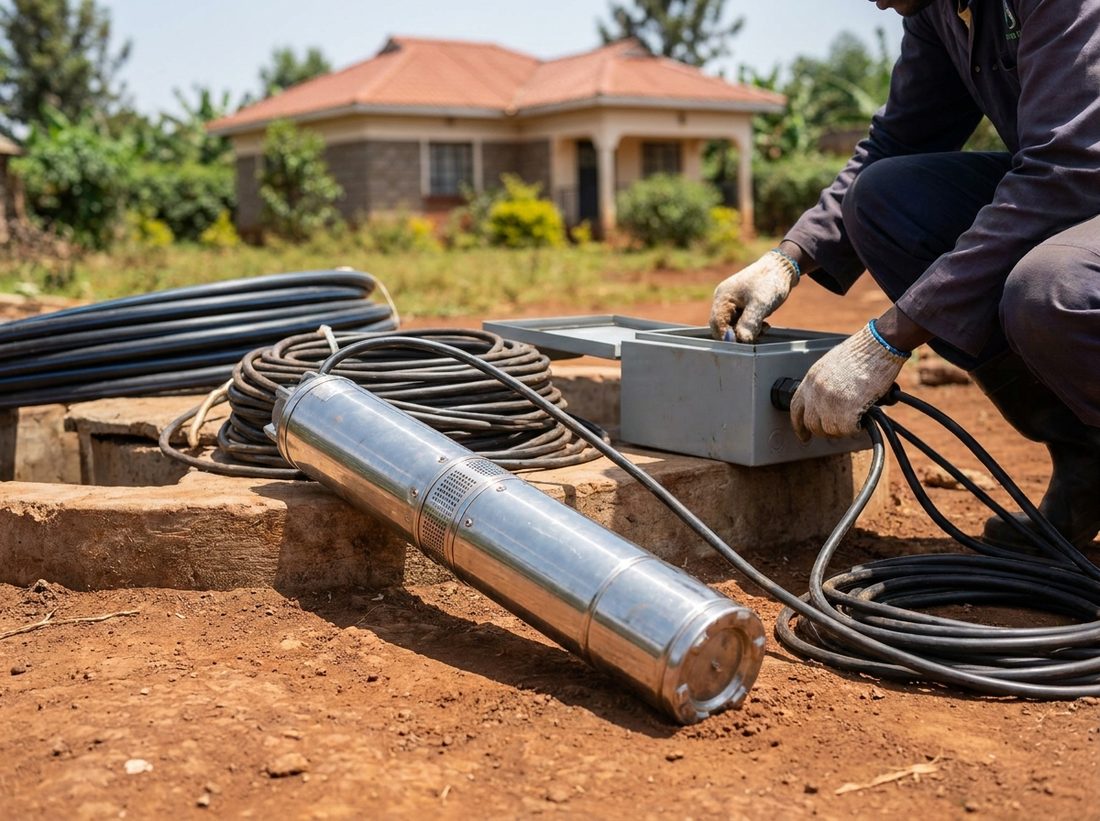
Electric Submersible Pump and InstallationPump, cabling and control boxKES 150,000
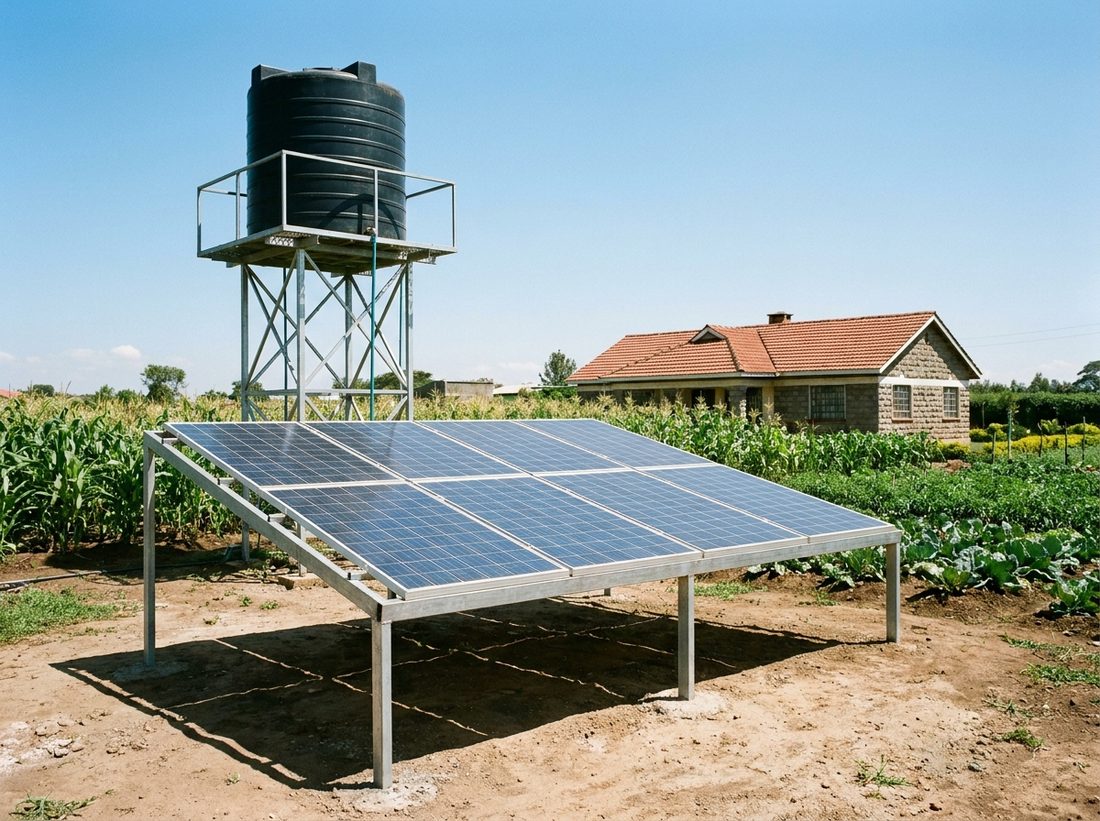
Solar Pumping SystemSolar pump, panels and controllerKES 250,000
50m Borehole, drilled and equipped50m · air rotary · electric pumpKES 645,000
100m Borehole, drilled and equipped100m · air rotary · electric pumpKES 980,000
150m Borehole, drilled and equipped150m · air rotary · electric pumpKES 1,315,000

Rates are the Kenyan market rate as published by drilling companies, cross-checked between several. Per-metre lines are multiplied by the depth your survey finds, which is why no one can quote a total before surveying your plot.

Price list

100m Borehole, drilled and equipped, Complete package, 100m · air rotary · electric pump
Complete package

100m Borehole, drilled and equipped

100m · air rotary · electric pump

The most common depth in the Nairobi metro. Covers the survey, permits, 100m of air-rotary drilling with casing, test pumping and an electric submersible pump.

FromKES 980,000
Get a quote
150m Borehole, drilled and equipped, Complete package, 150m · air rotary · electric pump
Complete package

150m Borehole, drilled and equipped

150m · air rotary · electric pump

Where the water table sits deeper, as in much of Kajiado, Machakos and the drier counties. Same scope as the 100m package with 50 more metres of drilling and casing.

FromKES 1,315,000
Get a quote
50m Borehole, drilled and equipped, Complete package, 50m · air rotary · electric pump
Complete package

50m Borehole, drilled and equipped

50m · air rotary · electric pump

A shallow borehole where the aquifer sits close to the surface. Only viable if the hydrogeological survey confirms water at this depth, which it often does not.

FromKES 645,000
Get a quote
Hydrogeological Survey, Step 1 · Pre-drilling, Required before you can drill
Step 1 · Pre-drilling

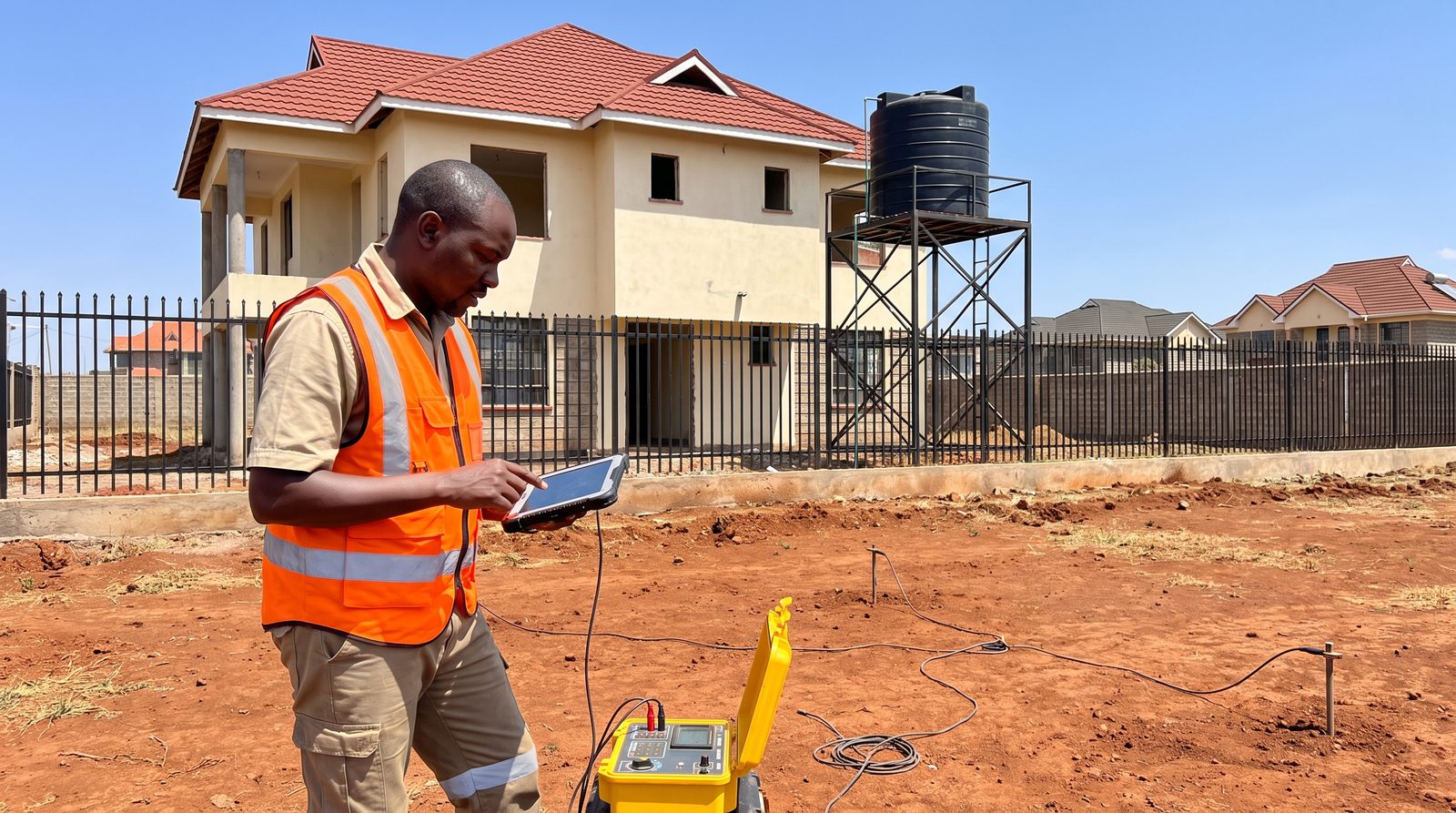
Hydrogeological Survey

Required before you can drill

A geologist maps the aquifer, marks the drilling point and writes the report the Water Resources Authority needs. Skip it and you risk paying for a dry hole.

FromKES 40,000
Get a quote
WRA and NEMA Permit Processing, Step 2 · Compliance, Authorisation to drill
Step 2 · Compliance

WRA and NEMA Permit Processing

Authorisation to drill

The Water Resources Authority permit and the NEMA environmental licence. Drilling without them is illegal and the borehole can be sealed.

FromKES 50,000
Get a quote
Air Rotary Drilling, Step 3 · Drilling, Per metre · stable rock formation
Step 3 · Drilling

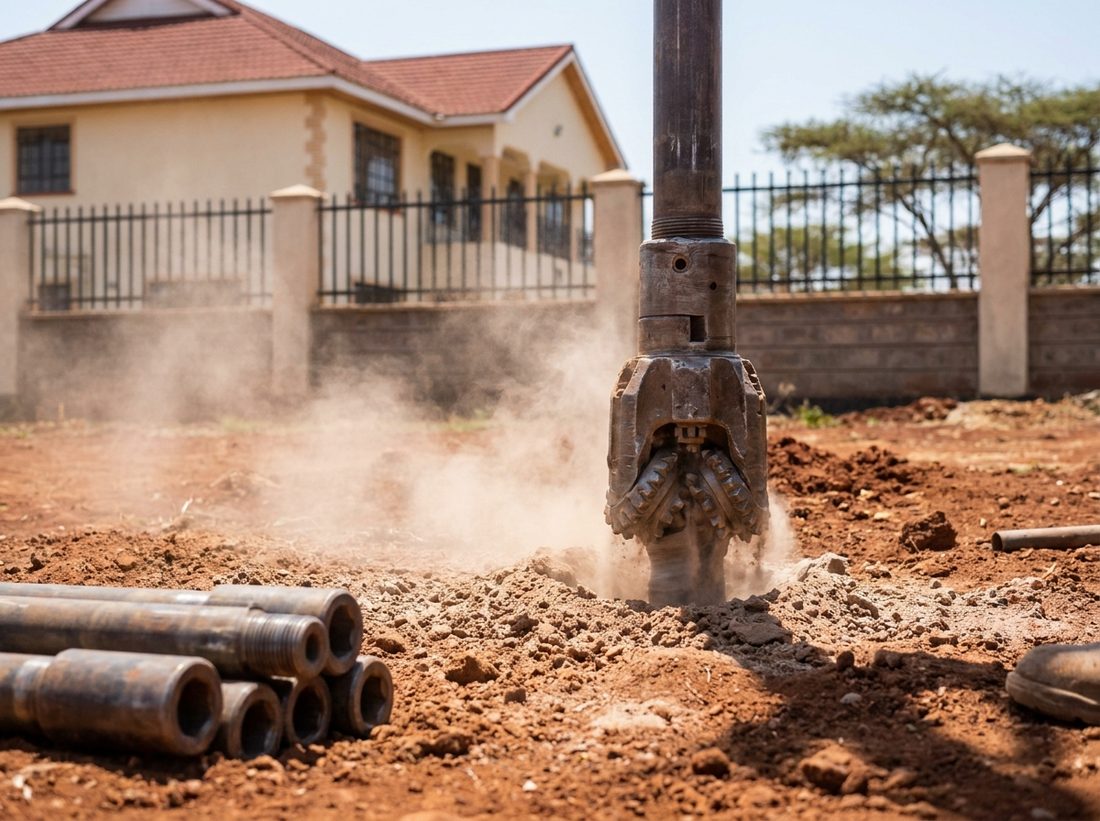
Air Rotary Drilling

Per metre · stable rock formation

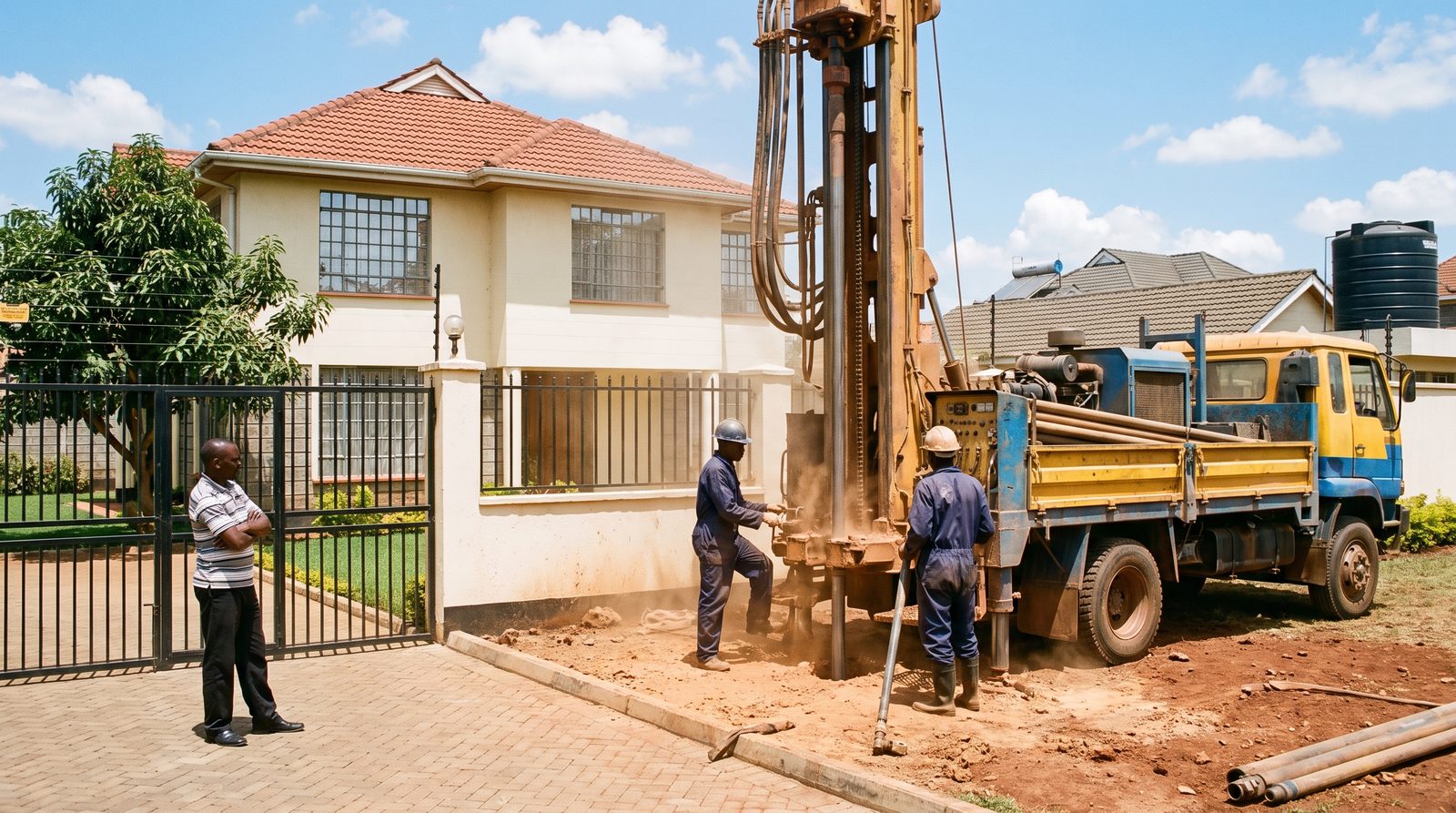
The standard method where there is solid rock beneath. The per-metre rate already includes mobilisation, casing, graveling, well development and test pumping.

FromKES 6,700
Get a quote
Mud Rotary Drilling, Step 3 · Drilling, Per metre · loose ground
Step 3 · Drilling

Mud Rotary Drilling

Per metre · loose ground

Used where the ground is loose or sandy with little rock. It costs more than double air rotary because the drilling itself is far slower and needs heavier casing.

FromKES 15,050
Get a quote
Casing and Gravel Pack, Included in the metre rate, Per metre · uPVC or steel
Included in the metre rate

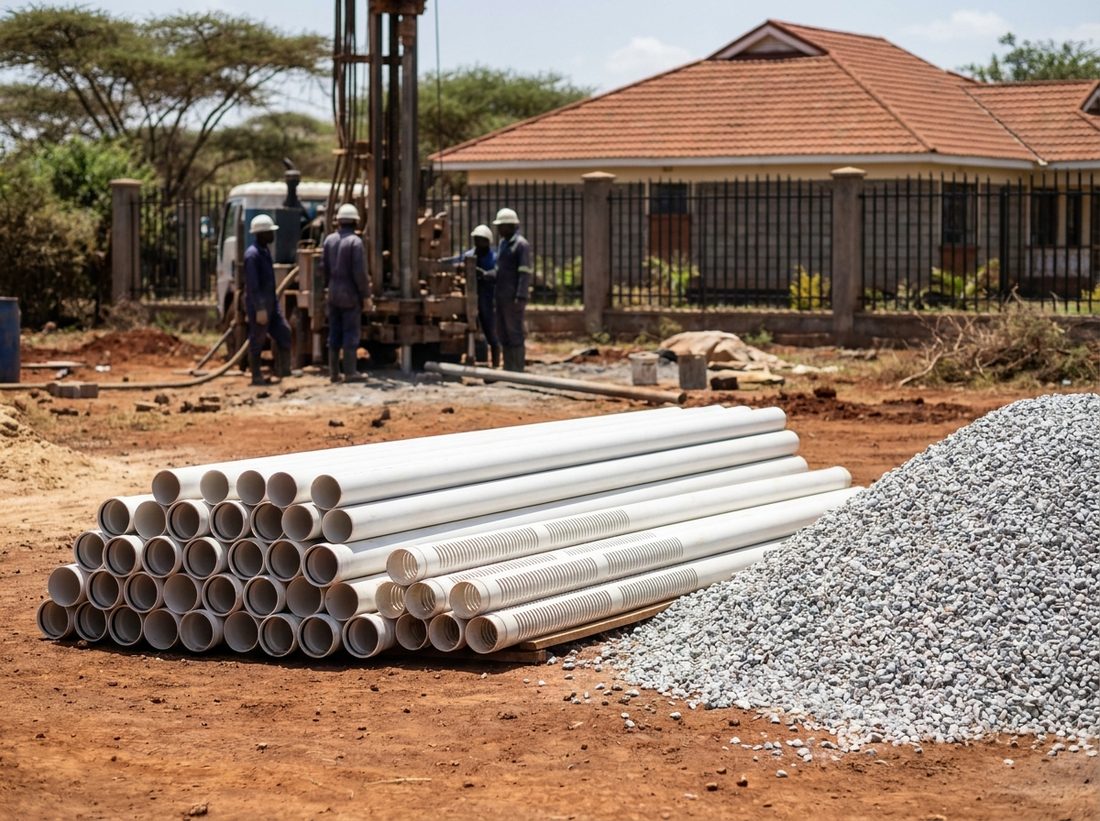
Casing and Gravel Pack

Per metre · uPVC or steel

The lining that stops the hole collapsing and keeps surface water out. It is the second biggest line in the per-metre rate after the drilling itself.

FromKES 2,269
Get a quote
Test Pumping and Water Analysis, Step 4 · Commissioning, Per metre · yield plus chemical test
Step 4 · Commissioning

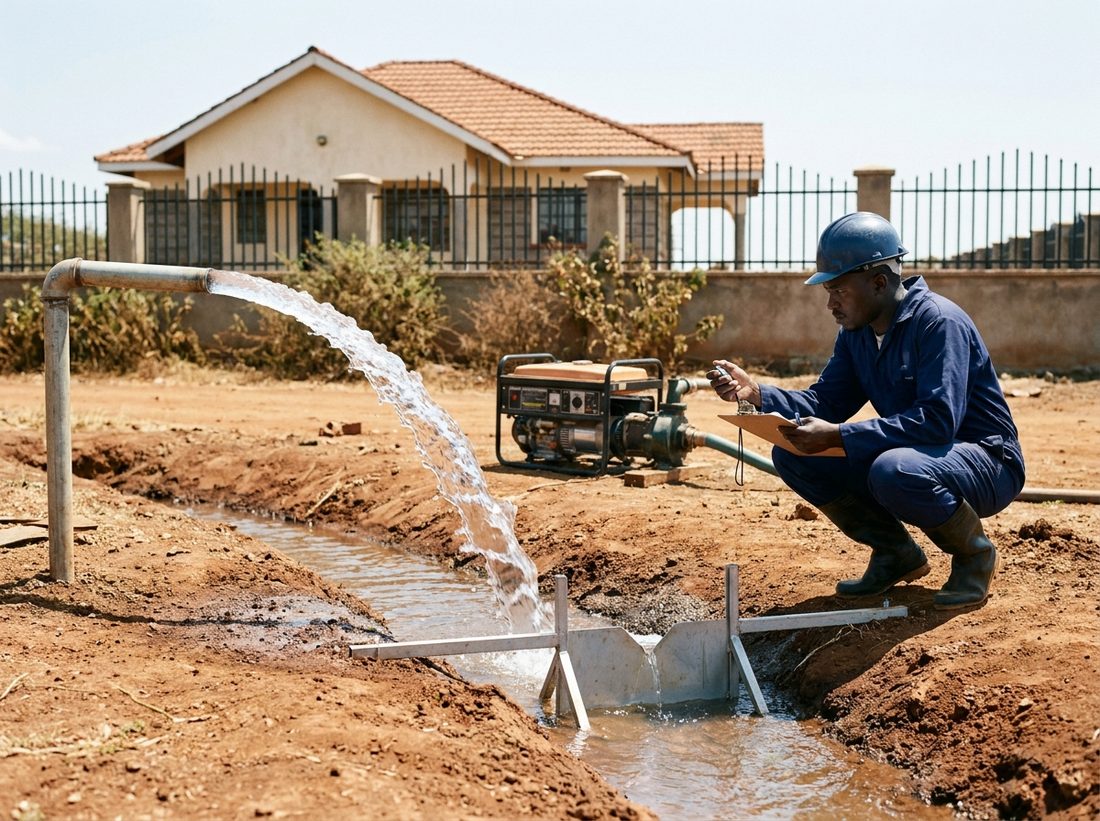
Test Pumping and Water Analysis

Per metre · yield plus chemical test

Measures the real yield in cubic metres per hour and tests whether the water is safe to drink. Ask for both certificates before you pay the final instalment.

FromKES 441
Get a quote
Electric Submersible Pump and Installation, Step 5 · Equipping, Pump, cabling and control box
Step 5 · Equipping

Electric Submersible Pump and Installation

Pump, cabling and control box

The standard way to lift the water. Cost depends on depth and the yield the borehole actually delivers, so it is only priced accurately after test pumping.

FromKES 150,000
Get a quote
Solar Pumping System, Step 5 · Equipping, Solar pump, panels and controller
Step 5 · Equipping

Solar Pumping System

Solar pump, panels and controller

No power bill and no grid dependency, which matters on farms and off-grid plots. It costs more upfront than an electric pump and pays back through saved tokens.

FromKES 250,000
Get a quote

What the per-metre rate is made of

A per-metre price is not just the hole. It bundles mobilisation of the rig at about KES 420 a metre, the drilling itself at about KES 3,220 a metre in rock, casing at about KES 2,269 a metre, graveling at about KES 280, well development at about KES 70, test pumping at about KES 420 and the water chemical analysis at about KES 21. That totals roughly KES 6,700 a metre.

In loose ground the drilling line jumps to about KES 11,270 a metre and casing to KES 2,569, which is why mud rotary lands near KES 15,050 a metre. That is the single biggest swing in the whole job, and it is decided by your ground, not by your driller. If a quote gives you one number with no breakdown, ask for this table.

The costs that sit outside the metre rate

Three things are usually quoted separately. The hydrogeological survey runs KES 40,000 to KES 90,000. The WRA permit and NEMA licence come to roughly KES 50,000. Equipping the borehole with an electric submersible pump starts near KES 150,000, and a solar pumping system starts near KES 250,000 and can reach KES 800,000 on a deep hole.

Mobilisation also varies with distance. A rig travelling to Kajiado or Machakos costs more to move than one working inside Nairobi.

Does a borehole pay for itself?

For a household buying water by bowser at around KES 15,000 a month, a borehole saves roughly KES 180,000 a year, so a KES 1 million borehole pays back in about five to six years and then supplies water for decades.

For a business, a school or a farm paying KES 60,000 to KES 120,000 a month for water, payback is often under two years. That is before the borehole raises the value of the land it sits on, which in the Nairobi metro is frequently the larger number.

Why the published prices in Kenya disagree

If you have been quoted three different rates, you are not being lied to by two of them. The published figures genuinely differ, and knowing why is most of what you need to judge a quote.

Grekkon Limited publishes a full per-metre itemisation totalling KES 6,700 for air rotary and KES 15,050 for mud rotary, and a county table where the ceiling is KES 9,500 a metre almost everywhere. Menengai Drilling publishes a range of KES 6,000 to KES 10,000 a metre, and prices by geology rather than by county: hard phonolite and trachyte around Nairobi at the top of that range, coral limestone at the coast at the bottom. On another of its own pages Menengai publishes KES 6,500 to KES 7,500. Davis and Shirtliff, as a brand, prices at the upper end of all of it.

Three things explain almost the whole spread. The first is method: mud rotary costs more than double air rotary, and your ground decides which you need. The second is what the number includes, because some rates carry casing and some do not. The third is geology, which is why a Nairobi rate and a Mombasa rate are different jobs rather than different margins.

So the honest answer to what a metre costs is that it depends on ground nobody has looked at yet. That is not evasion. It is why the survey comes first.
Why the cheapest quote is usually the expensive one

The way to make a borehole quote look cheap is to thin the casing, shorten the gravel pack, skip proper well development or quietly leave out the survey and permits. You find out two years later when the yield collapses or the county seals the hole.

Menengai publishes a useful threshold for this: below about KES 5,000 a metre, casing has almost certainly been excluded or dropped to a thinner class, and a hole cased that way can collapse within eighteen to thirty-six months. It is a fair rule of thumb, and it matches what the itemisation above shows, because casing alone is KES 2,269 of the KES 6,700 rate.

Compare quotes line by line against the table above. If one is far below the rest, the difference is nearly always something that has been removed rather than a genuine saving.

What if the borehole is dry?

Nobody in this market likes answering this, so here it is plainly: drilling is billed per metre whether or not it finds water. If the rig goes down a hundred metres and the hole is dry, you have bought a hundred metres of drilling.

That is the entire economic case for the hydrogeological survey. It costs from KES 40,000 against a drilling bill of several hundred thousand, and it is the only thing standing between you and paying full price for nothing. It improves the odds substantially; it does not guarantee water, and you should be suspicious of anyone who says otherwise.

Before you sign, ask what happens if the hole comes up dry, and get the answer in writing. Ask whether a second attempt is at full rate, and whether mobilisation is charged again. A contractor who has thought about this will have an answer ready.

Payment, VAT and how long it takes

Two things are missing from almost every borehole quote in Kenya. The first is whether the figure includes VAT at 16 per cent, which on a KES 1.4 million project is over KES 200,000 of ambiguity. Ask, and get it stated on the quote.

The second is the payment schedule. Borehole work is normally staged rather than paid in full upfront, and you want to know what falls due at mobilisation, at completion of drilling and at pump installation before you commit. Hold the final instalment until you have both certificates, the test-pumping yield and the water analysis.

On timing, the drilling itself is quick, usually two to five days. The survey and report take about a week, and the WRA and NEMA permits are the slow part at roughly two to four weeks. Plan for two to three months from decision to running water, and treat anyone promising a rig next week as someone who intends to skip the paperwork.

Proboreholedrillers
Why Proboreholedrillers

One team from the survey to the first glass of water

A borehole is five jobs bundled into one: the survey that finds the water, the permits that make it legal, the drilling, the test that proves the yield, and the pump. We run all five for you, with licensed rigs and a quote broken down line by line, so you know exactly what you are paying for before anyone starts.

  • Survey first, so you drill where the water is
  • WRA and NEMA permits handled for you
  • A quote itemised at real market rates
Free quote, no obligation

Do you need a borehole drilled?

Tell us where the plot is and what the water is for. We will handle the survey, the permits and the drilling, and come back to you with the likely depth and what it will cost. Countrywide, all 47 counties.

Get a free quote
Questions, answered

Frequently asked questions

How much does it cost to drill a borehole in Kenya?+

From about KES 645,000 for 50m, KES 980,000 for 100m and KES 1,315,000 for 150m, drilled and equipped. Drilling alone is about KES 6,700 per metre in stable rock.

What is the borehole drilling cost per metre in Kenya?+

About KES 6,700 per metre using air rotary in stable rock, and about KES 15,050 per metre using mud rotary in loose ground. Both rates already include mobilisation, casing, graveling, well development and test pumping.

What is the cheapest borehole drilling in Kenya?+

The cheapest real option is a shallow air-rotary borehole where the survey confirms water near the surface, from about KES 645,000 equipped. Be careful with quotes far under this, as the saving is usually thinner casing or a survey and permits that were left out.

How much is a hydrogeological survey in Kenya?+

KES 40,000 to KES 90,000. It is required before the Water Resources Authority will issue a permit, and it is what tells you whether there is water to drill for at all. Note the market spread: some established firms publish figures above KES 100,000 for the same deliverable.

What happens if the borehole is dry? Do I still pay?+

Yes. Drilling is billed per metre whether or not water is found, so a dry hole is a full bill. That is exactly why the hydrogeological survey goes first: it costs from KES 40,000 against a drilling bill of several hundred thousand. Ask your contractor in writing what happens if the hole is dry before you sign.

Is VAT included in borehole drilling quotes?+

Often it is not, and almost no one states it either way. At 16 per cent on a KES 1.4 million project that is over KES 200,000 of difference, so ask for it to be stated explicitly on the quote rather than assumed.

How deep are boreholes in Kenya?+

It depends entirely on where you are. Around much of the Nairobi metro water is commonly reached near 100m, while parts of Kajiado, Machakos and the drier counties run to 150m or beyond, and published industry figures put the typical national range at roughly 120m to 250m. Only the survey tells you your number.

How long does borehole drilling take?+

The drilling itself is two to five days. The survey and report take about a week and the WRA and NEMA permits roughly two to four weeks, so the paperwork sets your timeline. Plan for two to three months overall.

What is included in a borehole drilling quote?+

A complete quote covers the hydrogeological survey, the WRA and NEMA permits, mobilisation, drilling per metre, casing and gravel pack, well development, test pumping, water chemical analysis, the wellhead and the pump. If a quote is one number with no breakdown, ask which of those it does not include.

Why do borehole quotes vary so much?+

Depth and ground type. Drilling through loose ground needs mud rotary and more casing, which roughly doubles the per-metre rate. Distance from the rig and the pump you choose account for most of the rest.

Explore more

Your own water supply, drilled by licensed contractors. Find out what your site needs and what it will take.

View Home

The step that decides whether your borehole finds water, and the report the Water Resources Authority will ask for.

View Survey

The lining that keeps the hole open and the dirty water out. It is where cheap quotes cut corners.

View Casing