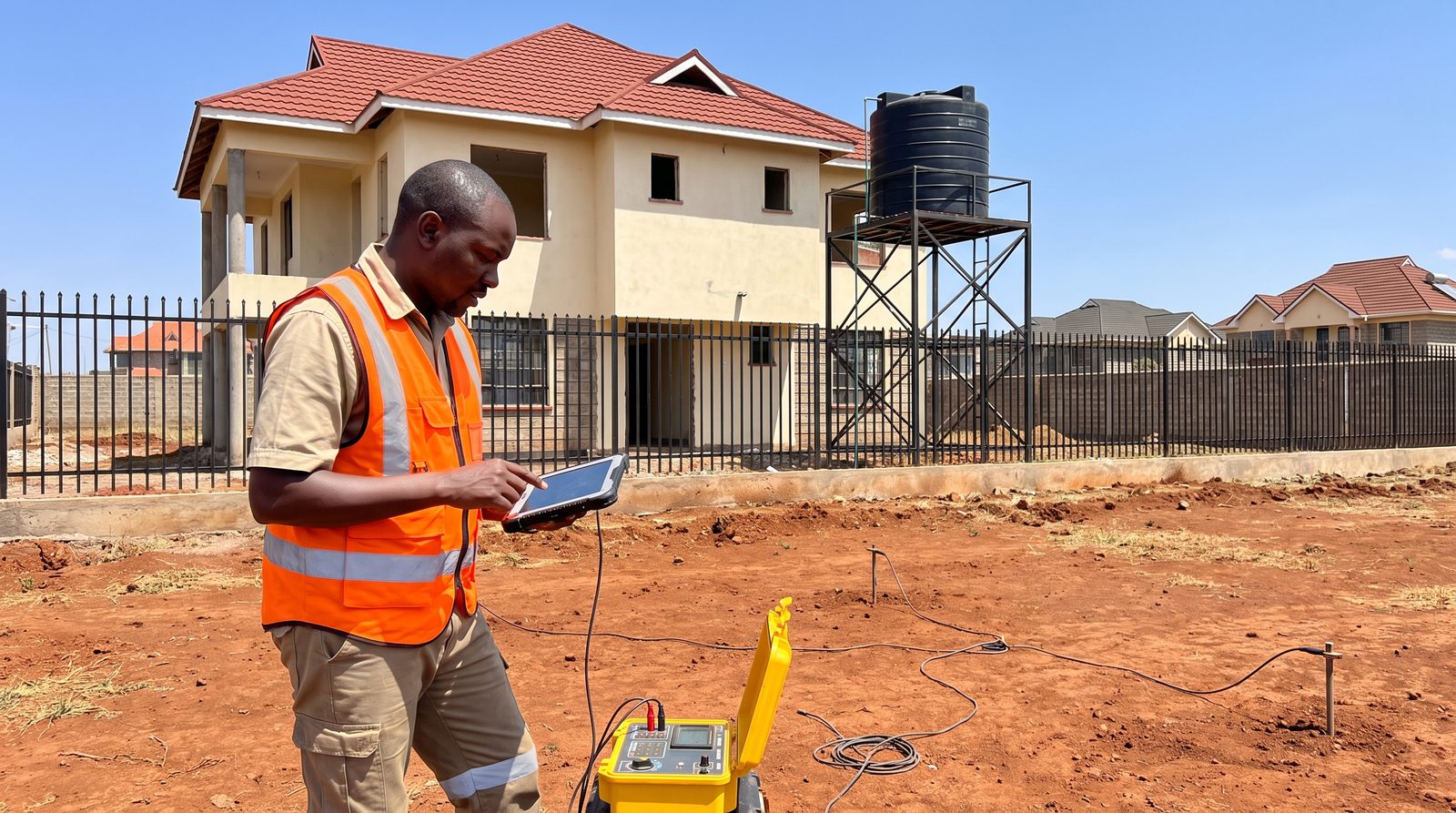
Hydrogeological Survey
Required before you can drill
A geologist maps the aquifer, marks the drilling point and writes the report the Water Resources Authority needs. Skip it and you risk paying for a dry hole.
FromKES 40,000
Get a quoteClean at the source is not the same as safe to drink. What the tests look for and what to do about it.
Get a free quote✓ Countrywide, all 47 counties
Borehole water in Kenya is often safe to drink, but not always, and you cannot tell by looking at it. Groundwater picks up whatever the rock it sits in contains, which in parts of the Rift Valley means fluoride well above the safe limit, and near the coast means salinity.
This is what the water chemical analysis at the end of drilling is for. It costs very little, about KES 21 a metre inside the drilling rate, and it is the only thing standing between you and a decade of drinking something you should not.
A standard analysis covers fluoride, salinity and total dissolved solids, iron and manganese, nitrates, hardness, pH and bacteriological contamination. Each has a different fix, which is why treating water before you have the report is guesswork.
Keep the certificate. Buyers and valuers ask for it, and it is the baseline you compare against if the water changes years later.
High fluoride, common in the Rift Valley, needs a defluoridation filter and is the one problem people most often ignore because the water tastes fine. Salinity near the coast needs reverse osmosis, which is the expensive answer. Iron and manganese, which stain laundry and fittings, are removed with an oxidising filter.
Bacteriological contamination is different, because it usually means the borehole has a construction problem letting surface water in rather than an aquifer problem. Fix the casing, do not just chlorinate.
Boiling is the one thing worth being clear about. It kills bacteria, so it is a sensible emergency measure while you wait for a report. It does nothing about fluoride, salinity or nitrates, and because boiling evaporates water while leaving the minerals behind, it slightly concentrates them. Boiling is not a treatment for a chemical problem.
A borehole is drilled into an aquifer, a layer of rock or sand that holds water and lets it move through. The water sitting in it has been in contact with that rock for a long time, and it carries whatever the rock is made of. That is the whole explanation for why two boreholes a few kilometres apart can produce very different water.
It is also why your neighbour's test result is not yours. Aquifers are not uniform, and depth changes which one you are drawing from. The only water chemistry that tells you anything about your borehole is the analysis from your borehole.
Fluoride is the big one, and it is concentrated where the geology is volcanic. Across much of the Rift Valley, and in pockets around Nakuru, Naivasha and Baringo, groundwater carries fluoride at levels well above what is safe to drink over years. It is invisible and tasteless, which is precisely why it is dangerous: nothing about the water warns you, and the damage is cumulative, showing up as mottled teeth and, over long exposure, skeletal problems. If your borehole is in the Rift, treat the fluoride result as the most important line on the certificate.
Salinity is the coastal problem. Near the shore, and increasingly further inland where heavy abstraction has pulled seawater into the aquifer, boreholes produce brackish water with high total dissolved solids. You taste this one immediately. It is treatable with reverse osmosis, which is the most expensive answer in the treatment catalogue and worth knowing about before you drill rather than after.
Iron and manganese are widespread and mostly a nuisance rather than a danger: they stain laundry, mark fittings and give water a metallic edge. An oxidising filter handles them. Hardness, from calcium and magnesium, scales kettles and shortens the life of anything that heats water. Nitrates are the one that should worry you, because they usually mean something on the surface is reaching the aquifer, and that is a construction or siting problem rather than a geological one.
The certificate is the document you are actually buying at the end of a borehole, and most people file it without reading it. It lists each parameter against the limit it is meant to sit under. Your job is to check three things: that every parameter has a figure beside it rather than a blank, that the lab is one the Water Resources Authority recognises, and that the sample was taken from your borehole after development rather than from a tap somewhere convenient.
Anything sitting near a limit rather than under it deserves a second look, because groundwater chemistry moves as an area develops and more boreholes draw on the same aquifer. A fluoride result just inside the line today is not a result you can rely on in ten years.
Keep the certificate somewhere you will find it. It is your baseline. If the water changes, the only way to know what changed is to compare against the day the borehole was new, and nobody keeps that data for you.
Treatment is priced by what is wrong, which is the entire reason you test before you buy equipment. Bacteriological problems are the cheapest to solve and the ones most likely to be a symptom of something else: if surface water is reaching your borehole, chlorinating the output treats the smell while the cause carries on. Fix the casing and the wellhead seal instead.
Iron and manganese need an oxidising filter, which is a mid-range piece of equipment and largely maintenance-free. Fluoride needs defluoridation, usually activated alumina, and it is a serious purchase. Salinity needs reverse osmosis, which is the most expensive of the lot and also wastes a proportion of what you pump, so it changes the yield you need from the hole.
The order matters and it is the reverse of how most people do it. Test, then buy. Buying a purifier before the analysis is guessing at a problem you have not identified yet, and the commonest outcome is a household with an expensive filter that does nothing about the one contaminant they actually have.
Piped water arrives treated to a standard, and its reliability is somebody else's decision. Borehole water arrives exactly as the aquifer made it, and its reliability is yours. That is the whole trade, and which side of it you want depends less on chemistry than on what your supply currently does to your week.
There is a middle position worth naming, because plenty of Kenyan households live in it: borehole water for everything except drinking, mains or bottled for the glass. It is not a failure of the borehole. On a plot where the analysis comes back with high fluoride and defluoridation is not affordable this year, it is a sensible answer that still ends the rationing problem, the bowser problem and the storage problem.
Hardness is the most common complaint about Kenyan borehole water and the least dangerous. Calcium and magnesium dissolved out of the rock make soap refuse to lather, leave a film on glasses, scale the inside of a kettle and slowly ruin anything that heats water. It is a nuisance and an appliance cost rather than a health problem.
A softener handles it, and whether it is worth installing is a straightforward sum: what you spend replacing shower heaters, kettles and washing machine elements against what the unit costs. On a household with a lot of hot water, it pays. On a plot using borehole water for the garden and the toilets, it usually does not.
What matters is not confusing hardness with the things that are dangerous. Water can be perfectly soft and full of fluoride. It can scale your kettle and be entirely safe to drink. Only the analysis separates the annoying from the harmful, which is the whole argument of this page.
Households with young children, because fluoride does its damage during the years teeth and bones are forming, and the Rift Valley is exactly where young families are buying plots. Anyone on a plot downhill of a pit latrine, a fuel station or an industrial user, because nitrates and bacteria travel with groundwater rather than staying politely put.
Farms irrigating food crops, because what is in the water ends up in the soil and then in the produce, and salinity in particular accumulates season after season until the land itself changes. And anyone drilling near the coast, where salinity is the norm rather than the exception and reverse osmosis is a cost to plan for rather than discover.
The analysis at handover is a snapshot of one day. Retest if the taste, smell or colour changes, if the yield drops, if there has been flooding, or if something new appears nearby that could reach your aquifer: a fuel station, a heavy industrial user, a large new development drawing on the same water.
Retest before you sell, too. A current certificate is one of the few pieces of paper that turns a borehole from an unknown on a title into a proven asset, and buyers who know what they are looking at will ask for it.
It is easy to read a page like this and conclude that borehole water is a problem. It is not. Most Kenyan boreholes produce water that is entirely fine once you know what is in it, and the ones that do not are usually fixable for a fraction of what the borehole cost. The point of testing is not fear. It is that you cannot manage what you have not measured.
Set the treatment cost against what you are replacing. A household spending KES 15,000 a month on trucked water of unknown provenance is already drinking something nobody tested, delivered by someone who does not publish an analysis, at a price that rises every dry season. A borehole with a known fluoride figure and a filter on it is a strictly better position than a tank filled by a bowser and hope.
The reason we push the certificate so hard is not that borehole water is dangerous. It is that it is yours. Nobody else is going to test it, and there is no utility to complain to. That is the trade you accept when you own your supply, and it is a good trade, provided you actually do the part that is now your job.
It is the most common shortcut in this market and it is worth dismantling. Aquifers are not uniform sheets of water sitting at one level. They are layers of rock and sand with different chemistry, at different depths, and a borehole a few hundred metres away may be drawing from a different one entirely.
So your neighbour's clean result is not your result, and their fluoride problem is not automatically yours either. Depth changes which layer you are in, and two boreholes on adjacent plots drilled to different depths can produce genuinely different water. The only chemistry that describes your borehole is the analysis from your borehole.
What a neighbour's borehole does tell you is useful in a different way: roughly how deep water was found, roughly what it yielded, and which contractor did the work. That is worth asking about. Just do not let it substitute for your own certificate.
A water chemical analysis is part of the Water Resources Authority process, not an extra your driller invented to pad the bill. It is also the cheapest line in the whole job, at roughly KES 21 a metre inside the drilling rate.
Ask for the certificate before the final payment, not after. It is the one document that proves what you actually bought, and the only baseline you can compare against if the water changes in ten years.
Required before you can drill
A geologist maps the aquifer, marks the drilling point and writes the report the Water Resources Authority needs. Skip it and you risk paying for a dry hole.
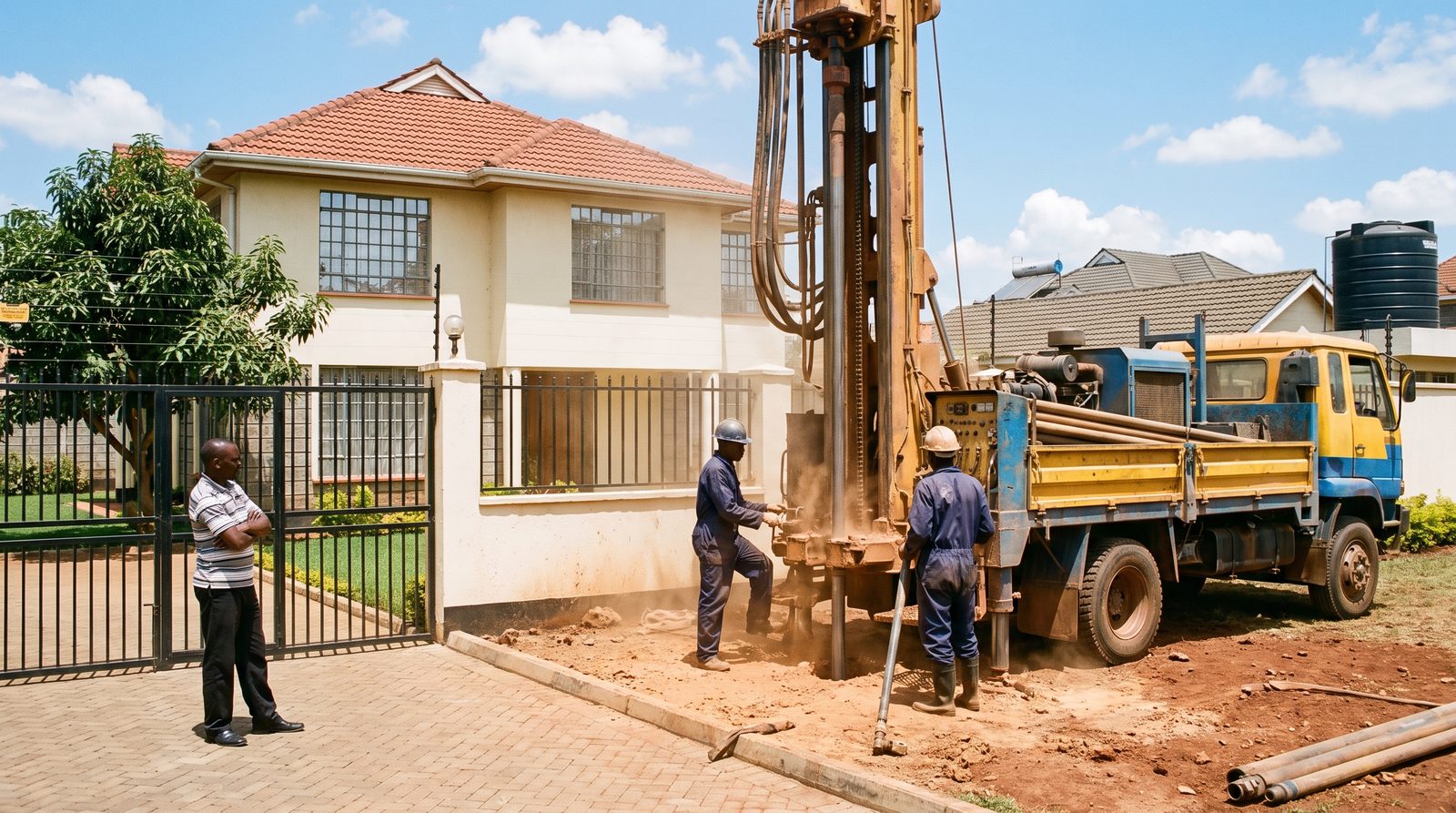
100m · air rotary · electric pump
The most common depth in the Nairobi metro. Covers the survey, permits, 100m of air-rotary drilling with casing, test pumping and an electric submersible pump.
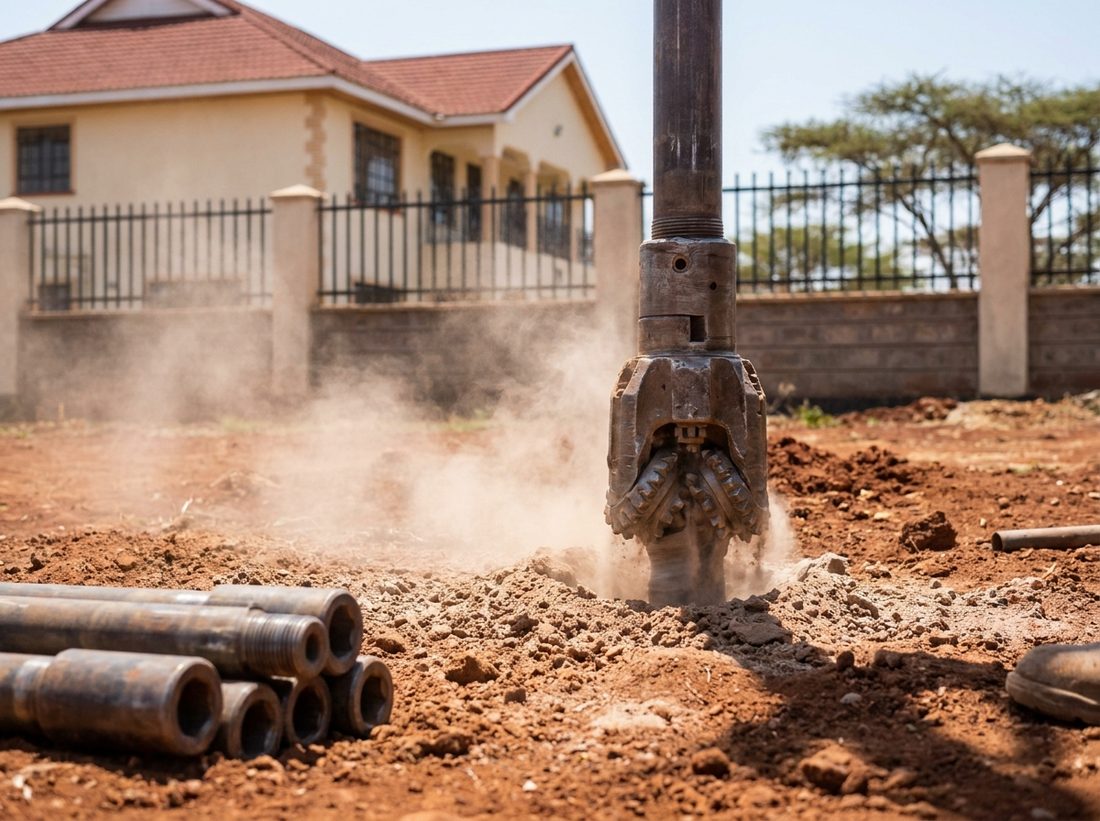
150m · air rotary · electric pump
Where the water table sits deeper, as in much of Kajiado, Machakos and the drier counties. Same scope as the 100m package with 50 more metres of drilling and casing.
Per metre · stable rock formation
The standard method where there is solid rock beneath. The per-metre rate already includes mobilisation, casing, graveling, well development and test pumping.
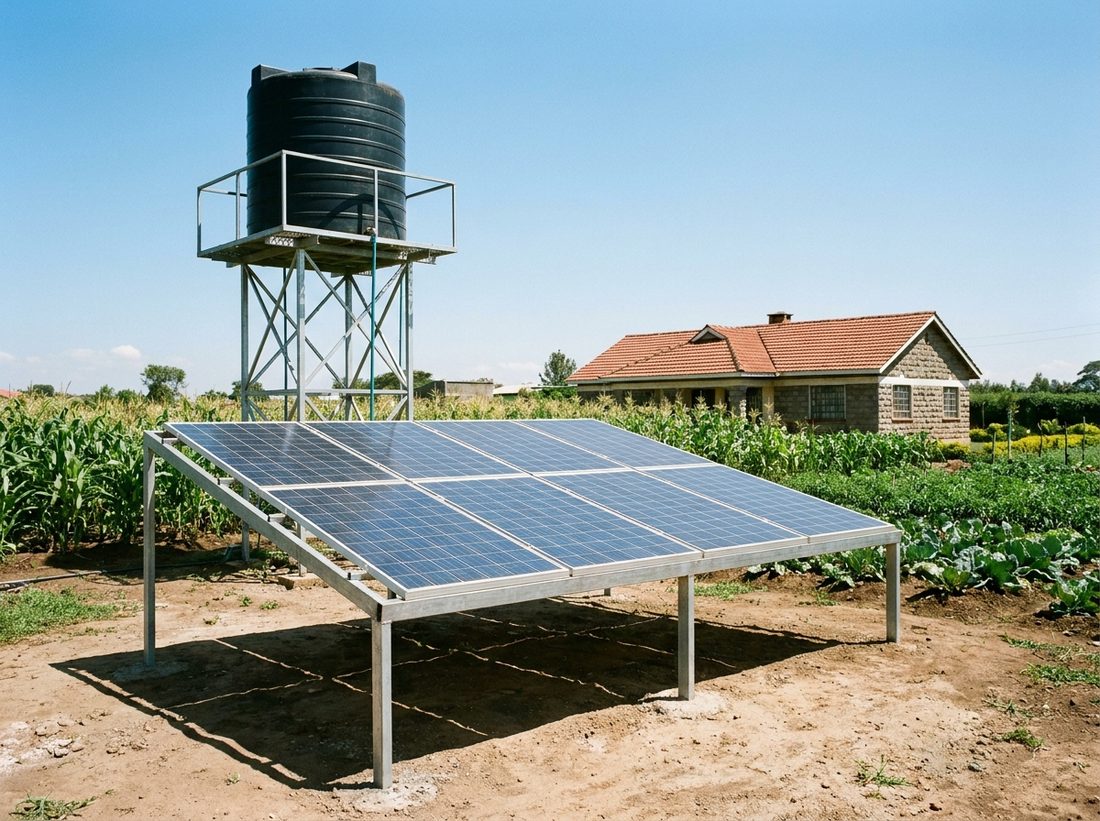
Solar pump, panels and controller
No power bill and no grid dependency, which matters on farms and off-grid plots. It costs more upfront than an electric pump and pays back through saved tokens.
Authorisation to drill
The Water Resources Authority permit and the NEMA environmental licence. Drilling without them is illegal and the borehole can be sealed.
A borehole is five jobs bundled into one: the survey that finds the water, the permits that make it legal, the drilling, the test that proves the yield, and the pump. We run all five for you, with licensed rigs and a quote broken down line by line, so you know exactly what you are paying for before anyone starts.
Tell us where the plot is and what the water is for. We will handle the survey, the permits and the drilling, and come back to you with the likely depth and what it will cost. Countrywide, all 47 counties.
Get a free quoteOften, but not always. It depends entirely on the aquifer. Fluoride in parts of the Rift Valley and salinity near the coast are the common problems, and only a chemical analysis will tell you which apply to your borehole.
Treat according to the analysis, not by default. High fluoride needs a defluoridation filter, salinity needs reverse osmosis, iron and manganese need an oxidising filter, and bacteriological contamination usually means fixing the casing rather than chlorinating.
Yes, and the test is already inside a properly quoted drilling price at around KES 21 per metre. Ask for the certificate before you pay the final instalment.
No. Boiling kills bacteria, which makes it a reasonable emergency step, but it does nothing to fluoride, salinity or nitrates. Because boiling evaporates water and leaves the minerals behind, it slightly concentrates them. Fluoride needs a defluoridation filter.
A salty taste usually means salinity or high total dissolved solids, which is common near the coast and needs reverse osmosis. Staining on laundry and fittings is usually iron and manganese, which an oxidising filter removes. The analysis tells you which you have.
The analysis at the end of drilling is your baseline. Retest if the taste, smell or colour changes, if the yield drops, or if there is flooding or a new activity nearby that could reach the aquifer. Compare against the original certificate, which is why you keep it.
It is more reliable, because it does not depend on a rationing schedule, and after the capital cost it is cheaper. Whether it is better to drink depends entirely on your geology. Piped water is treated to a standard; borehole water is whatever the aquifer contains until you test and treat it.
Your own water supply, drilled by licensed contractors. Find out what your site needs and what it will take.
View Home →Every line of a borehole quote, priced at the 2026 market rate, so you can tell a fair number from a padded one.
View Cost →The plain version, before you spend a million shillings on one.
View Buyer's Guide →A borehole that has stopped giving water is usually blocked, not finished.
View Maintenance →